

Drywall and Flooring Water Damage: Repair or Replace?
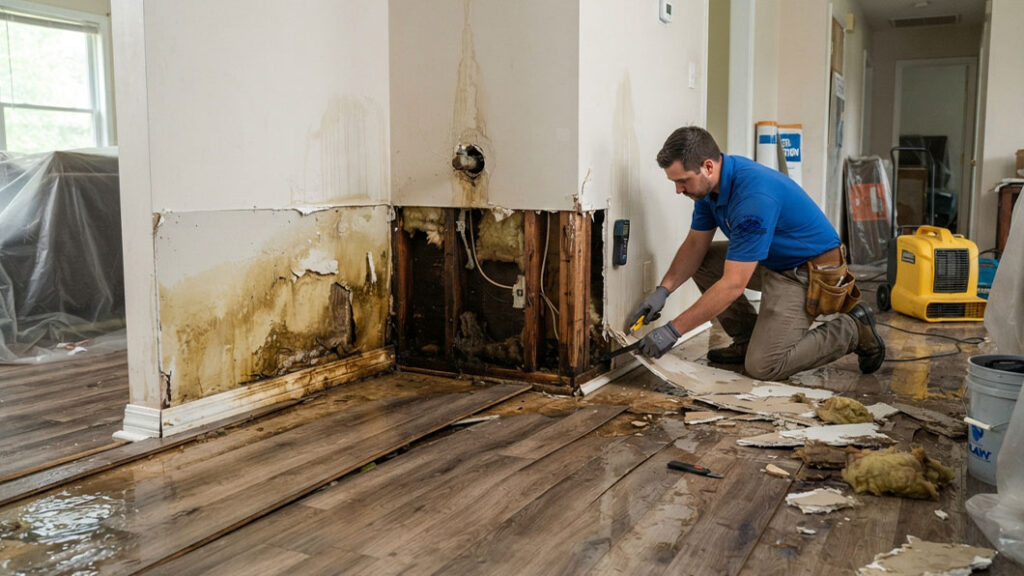
When water gets into your home, the first questions come quickly. Can the walls be saved? Will the floors dry out? Do I really need to tear everything out? If you are dealing with water damaged drywall or soaked flooring after a storm, a burst pipe, or a leaking roof, you are probably weighing cost, time, and stress all at once.
The honest answer is that it depends. Some materials can be dried and repaired if you act fast. Others should be replaced, even if they look fine on the surface. The difference comes down to three things: what kind of water it was, how long the materials stayed wet, and what they are made of.
This guide explains how to make that decision with confidence. It was written for homeowners in Fort Walton Beach, Destin, Miramar Beach, Panama City Beach, and across the Florida Panhandle, where humidity and storm season make water damage a real concern.
This article offers general guidance. Every home and every loss is different, so have a qualified professional inspect the damage before you decide.
Start With the Source and the Safety Check
Before you decide what to repair, make sure the water has stopped and the home is safe. Shut off the main water supply if a pipe has failed, and avoid any room where water touches outlets, appliances, or the electrical panel. If your home flooded during a hurricane, wear gloves, boots, and an N95 mask, and treat the water as contaminated.
Then document everything before you remove anything. Photos and videos of the damage support your insurance claim and help your contractor understand what happened. Our guide on how to document hurricane damage for your insurance claim walks you through that process, and our article on the first 48 hours after hurricane flooding covers safety and drying basics.
Why the Type of Water Decides Everything
Restoration professionals generally sort water damage into three categories, and this classification often decides whether a material can be saved.
- Category 1, clean water. This comes from a sanitary source, such as a broken supply line or a leaking faucet. Materials often have the best chance of being dried and saved, especially if you catch the problem quickly.
- Category 2, gray water. This water carries some contamination, such as water from a washing machine or dishwasher overflow. Materials may be salvageable in some cases, but they need careful cleaning and, often, more replacement.
- Category 3, black water. This is heavily contaminated water, including sewage and floodwater from a storm. Porous materials that absorbed it are usually removed instead of dried.
Clean water also does not stay clean forever. If Category 1 water sits for a day or two, bacteria can grow and the situation can effectively become worse. That is why speed matters as much as the source.
Water Damaged Drywall: Repair or Replace?
Drywall is made of gypsum between two layers of paper, and it absorbs water like a sponge. It also loses strength quickly when wet. Whether it can be saved depends on how much it absorbed and how contaminated the water was.
When drywall can often be repaired
Drywall has the best chance of being saved when all of these are true:
- The water was clean (Category 1), such as from a small supply line leak.
- The drywall was wet for a short time, generally less than 24 to 48 hours.
- The surface is still firm, flat, and not crumbling or sagging.
- There is no visible mold, odor, or staining that keeps returning.
- Moisture readings, taken with a meter, show that the wall dries to normal levels compared with an unaffected wall.
In these cases, fans, dehumidifiers, and sometimes opened wall cavities can dry the wall in place. Afterward, a small area may need patching, priming, and painting.
When drywall should be replaced
Plan on replacement when:
- The water was floodwater, sewage, or otherwise contaminated.
- The drywall stayed wet for several days.
- It is swollen, soft, bowed, crumbling, or peeling at the seams.
- You see or smell mold or mildew.
- Moisture meters show wetness that does not go away with drying.
- Paint is bubbling or the paper facing has separated from the gypsum.
Drywall that has gone through any of these conditions is unlikely to return to a healthy state, and covering it with paint will only hide the problem.
How much drywall needs to come out?
Moisture travels upward through drywall by wicking, so wet areas often extend higher than the visible waterline. Professionals commonly cut out the damaged section at least a foot or more above the highest visible water mark, and sometimes remove the full height of the wall. Cutting in a straight line, rather than removing random patches, also makes the new drywall easier to tape and finish.
Opening the wall lets you see what is behind it, which is often the most valuable part of the process.
Insulation and Framing Matter, Too
Wet drywall rarely travels alone. Behind it, insulation and wood framing may also be saturated.
- Fiberglass insulation that is wet loses its insulating value and holds moisture against the wall. It is typically removed and replaced.
- Spray foam and rigid foam may handle moisture better, but they should still be inspected.
- Wood framing and studs can usually be dried, cleaned, and kept, as long as they are structurally sound and show no signs of rot or heavy mold.
Drying the framing completely before closing the wall is essential. Closing up a wall with trapped moisture is one of the most common causes of mold problems that return months later.
Flooring Water Damage: Repair or Replace?
Flooring responds very differently to water depending on the material. Here is how the most common types in Florida homes typically fare.
Carpet and pad
Carpet and its padding act like a sponge. With clean water caught quickly, carpet can sometimes be professionally cleaned and dried, though the pad is often replaced. After floodwater or other contaminated water, both carpet and pad are normally discarded.
Solid hardwood
Hardwood is one of the more forgiving floors if the water was clean and you act fast. Specialty drying systems can sometimes pull moisture out of the boards and subfloor. However, if the boards have cupped, buckled, or begun to separate, or if the floor stayed wet for days, replacement or refinishing after drying is more likely. Never sand or refinish a hardwood floor until it has fully dried, or you risk trapping moisture.
Engineered hardwood and laminate
These floors have layered cores that can swell when wet, and the swelling usually does not reverse. Laminate in particular tends to need replacement after real water exposure, especially at seams and edges.
Luxury vinyl plank and sheet vinyl
Many vinyl products are water-resistant, which does not mean the space underneath is safe. Water can slip beneath the planks or the sheet and sit against the subfloor. Click-lock planks can sometimes be lifted, dried, and reinstalled if the water was clean. Glued-down vinyl is harder to save, and floodwater generally means replacement.
Tile and grout
Tile itself is durable and often survives. The concern is what is underneath. Water can seep through grout lines and soak the underlayment, adhesive, and subfloor. If tile begins to loosen, sounds hollow, or you notice odors, moisture may be trapped below. In some cases, the tile has to be removed so the base can dry properly.
Subfloor and baseboards
Plywood subfloors can often be dried if they are cleaned and the water was not contaminated, while particleboard and similar materials tend to swell and weaken. Baseboards and trim are usually easy to remove, dry, and reinstall, or replace inexpensively if they are warped.
Signs of Hidden Moisture and Mold
Water damage is not always obvious. Even when surfaces look dry, moisture can remain behind walls or beneath floors. Watch for:
- A musty or earthy smell that does not go away
- Stains, discoloration, or spots that spread or reappear after painting
- Paint that bubbles, blisters, or peels
- Floors that feel soft, spongy, or uneven
- Baseboards or trim that pull away from the wall
- Warm, humid areas or condensation on windows
- Allergy-like symptoms that seem to appear or worsen indoors
Professionals use moisture meters and sometimes thermal imaging cameras to find wetness behind surfaces without cutting everything open. Because mold can begin growing within 24 to 48 hours in damp conditions, according to the U.S. Environmental Protection Agency, do not wait to investigate any suspicious area.
The EPA also notes that homeowners can often handle small mold areas, generally under about 10 square feet, but larger areas or any mold caused by contaminated water call for professional help. In Florida, mold assessment and remediation are regulated, so choose licensed specialists for that phase.
Older Homes: Test Before You Tear Out
If your home was built before the 1980s, take a pause before demolition. Older drywall joint compound, popcorn ceilings, vinyl floor tiles, and flooring adhesives may contain asbestos, and paint from before 1978 may contain lead. Disturbing these materials can release hazardous dust.
A licensed professional can test materials before work begins. It is a small step that protects your family and the people working in your home.
DIY or Hire a Professional?
Some homeowners are comfortable handling minor jobs. Others prefer to leave it to a licensed team, especially after a major storm. Here is a simple way to think about it.
A do-it-yourself approach may be reasonable when:
- The water came from a small, clean leak that was caught immediately.
- The affected area is small and easy to reach.
- You can confirm the area is completely dry with a moisture meter.
- There is no mold, no contaminated water, and no older-home hazards.
Call a professional when:
- Floodwater or sewage was involved.
- The damage covers multiple rooms or a large wall area.
- You see mold or notice persistent odors.
- The water reached electrical components, insulation, or the subfloor.
- Your home is older and may contain asbestos or lead.
- You are filing an insurance claim and need detailed written estimates.
If you are unsure, getting an inspection costs far less than repairing the same problem twice.
What the Repair Process Typically Looks Like
While every project is different, most water damage repairs follow a similar sequence:
- Safety and documentation. Stop the source, make the home safe, and photograph the damage.
- Water removal and drying. Extract standing water, then use air movers and dehumidifiers to dry the space.
- Moisture testing. Confirm the wet areas and track progress with meters.
- Demolition and cleanup. Remove materials that cannot be saved, such as wet drywall, insulation, and flooring.
- Cleaning and treatment. Clean the framing and subfloor, and treat as needed.
- Final drying check. Verify that everything is truly dry before closing walls or installing floors.
- Rebuild. Install new drywall, tape, mud, and sand it smooth, then prime and paint. Install new flooring.
In Florida’s humid climate, drying and curing times can run longer than people expect. Joint compound, primer, and paint all need time to cure properly, so rushing the finish is a common cause of cracks, bubbles, and stains.
Common Mistakes to Avoid
- Painting over damp or stained drywall. It traps moisture and allows mold to grow beneath the surface.
- Closing up walls too soon. Hidden moisture can lead to mold and rot.
- Judging by appearance alone. A wall or floor can look dry and still hold moisture.
- Installing new flooring over a wet subfloor. This can warp the new floor and void warranties.
- Waiting too long. Every hour of delay increases the chance that a repair becomes a replacement.
- Skipping documentation. Photos taken before demolition support your insurance claim.
- Hiring the first person who knocks. After storms, verify licenses at MyFloridaLicense.com and ask for written estimates and proof of insurance.
How Pros Rem Can Help
Pros Rem is a Fort Walton Beach remodeling company serving Destin, Miramar Beach, Panama City Beach, and nearby communities. After a water event has been dried and evaluated, our team handles the rebuild: demolition and cleanup, drywall repair and replacement, flooring installation, and painting. We provide clear written estimates, which can also help with your insurance paperwork.
We also use AI-powered visual previews, so you can see your repaired walls and new floors before work starts. You can compare flooring styles and paint colors in your own space, then approve the look with confidence.
If you are deciding whether to repair or replace, contact Pros Rem for a free estimate. You can also learn more about our drywall services, flooring services, and professional painting services.
Frequently Asked Questions
¿Se puede salvar un panel de yeso dañado por el agua? A veces. Si el agua era limpia, el panel estuvo mojado por poco tiempo y aún está firme y sin moho, a menudo se puede secar y reparar. El panel de yeso expuesto a inundaciones o mojado durante varios días generalmente necesita ser reemplazado.
¿Cuánto tarda en secarse el yeso después de una inundación? Depende de la cantidad de agua, la humedad y el equipo de secado utilizado. Los profesionales verifican el grado de secado con medidores de humedad en lugar de adivinarlo, ya que una pared puede sentirse seca al tacto pero aún contener humedad en su interior.
¿Puedo instalar un piso nuevo sobre un contrapiso húmedo? No. El contrapiso debe estar completamente seco. Instalar sobre humedad puede provocar deformaciones, moho y fallas en el piso nuevo.
¿Cubre el seguro de hogar los daños causados por el agua en paneles de yeso y pisos? Depende de su póliza y de la causa de la inundación. Los daños repentinos y accidentales pueden tener un tratamiento diferente al de las inundaciones o las fugas prolongadas. Revise su póliza y llame a su aseguradora lo antes posible.
¿Se arruinan los pisos de baldosas por daños causados por el agua? Normalmente no. Las baldosas suelen sobrevivir, pero es posible que sea necesario inspeccionar y secar el adhesivo, la capa base y el subsuelo que se encuentran debajo.
Final Thoughts
Deciding whether to repair or replace water damaged drywall and flooring comes down to the type of water, the time it sat, and the materials involved. When the water was clean and you act quickly, you may be able to save a surprising amount. When it was contaminated or has lingered, replacement is the safer long-term choice.
If you are not sure which category your home falls into, have a qualified professional take a look. Our team at Pros Rem is ready to help you through each step, from evaluation to a finished, beautiful space.
