

Drywall Repair vs. Replacement: Which One Do You Need?
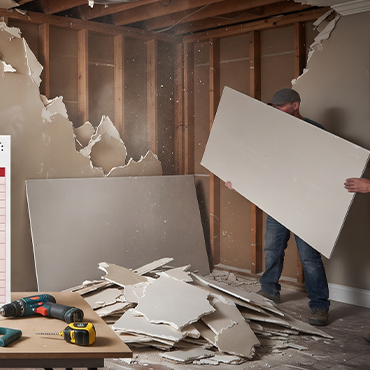
By the Pros Rem Team | Fort Walton Beach, FL
A hole from a doorknob, a crack that keeps coming back, a brown stain on the ceiling, a wall that feels soft when you press it. Drywall problems come in many shapes, and the first question is always the same: can this be repaired, or does it need to be replaced?
The answer matters for your budget, your schedule, and your home’s health. Replacing drywall that could have been patched wastes money. Patching drywall that should have been replaced hides a problem that will come back, sometimes with mold or structural damage attached.
This guide explains how to tell the difference. You will learn what kinds of damage are usually repairable, which ones call for replacement, what Florida’s humidity and storms add to the picture, and how to decide between DIY and a professional. It was written for homeowners in Fort Walton Beach, Destin, Mary Esther, Shalimar, Niceville, Santa Rosa Beach, Miramar Beach, and across the Emerald Coast.
This article offers general guidance. Every wall and every situation is different, so ask a qualified professional to inspect any damage you are unsure about.
First, a Quick Look at What Drywall Is
Drywall, also called sheetrock or gypsum board, is made of a gypsum core pressed between two layers of heavy paper. It is inexpensive, smooth, and easy to finish, which is why it covers the walls and ceilings of most homes built in the last several decades.
It also has weaknesses. The paper face and the gypsum core both absorb moisture, and wet drywall loses strength quickly. It dents, cracks, and tears. And because the surface is the starting point for paint, even small flaws can show through the finish. Understanding those traits makes the repair-or-replace decision much easier.
The Simple Rule of Thumb
Here is the short version, before we get into details.
Repair when the damage is small, local, and on the surface, the drywall is dry and firm, and there are no signs of mold, moisture, or movement in the structure.
Replace when the damage is large, the drywall is soft, wet, moldy, or sagging, or the problem keeps returning because of an underlying cause.
Most situations fall somewhere in between, so let us look at common types of damage one by one.
Damage That Can Usually Be Repaired
Nail pops and screw pops
Small bumps or cracked spots where a fastener has pushed outward are common as a house settles and materials expand and contract. They are usually repaired by resetting or replacing the fastener, adding compound, sanding, priming, and painting. If they appear in large numbers, ask whether movement or moisture is involved.
Small holes and dents
Holes from door handles, wall anchors, and picture hangers are among the easiest repairs. Small holes can be filled with patching compound or a mesh patch. Medium holes may need a larger patch with backing so the repair is flat and strong.
Hairline cracks and seam cracks
Thin cracks along taped seams or at the corners of doors and windows are often cosmetic. They are usually cut slightly, re-taped if needed, filled, sanded, and repainted. The key question is whether the crack returns. A crack that keeps reopening suggests movement or moisture, and the cause has to be found. See the section on recurring cracks below.
Surface damage and tears
Paper torn during wallpaper removal or a careless scrape can often be sealed and skim-coated smooth. A professional will seal the exposed paper before applying compound, because bare paper bubbles under moisture.
Stains on dry, firm drywall
A stain from an old, fixed leak, on drywall that is dry, firm, and shows no mold, can often be cleaned, sealed with a stain-blocking primer, and painted. Before you do this, confirm that the source is fixed and that the wall is truly dry, ideally with a moisture meter.
Damage That Usually Calls for Replacement
Large holes and widespread damage
A hole much larger than a hand, or damage across a big part of a wall, is often easier and more reliable to fix by cutting out the damaged section and installing new drywall. Very large patches can look bumpy if they are not properly supported and finished.
Soft, crumbling, or swollen drywall
If drywall feels spongy, crumbles when you press it, or has swollen, it has absorbed too much water and lost its strength. It will not return to normal. Remove and replace it.
Water damage from contaminated water
Floodwater, sewage, and other contaminated water are different from a clean leak. Drywall exposed to them is generally removed rather than cleaned. Our guide to water damaged drywall and flooring explains the difference in detail, and our article on what to do in the first 48 hours after hurricane flooding covers the first steps.
Mold growing into the drywall
Mold on the surface of a sealed wall can sometimes be cleaned. But mold that has grown into the paper or the gypsum core, or that returns after cleaning, means the material should be removed. Our guide to mold and mildew on walls explains how to decide and how to prepare. For larger areas or any mold tied to contaminated water, call a licensed professional. In Florida, mold assessment and remediation are regulated services.
Sagging or bowed ceilings
A ceiling that is sagging, bulging, or stained and soft is not only a cosmetic problem. It can be a safety hazard, because wet drywall is heavy and can fall. Stay out from under it and call a professional.
Fire and smoke damage
Drywall that has been scorched, or that is saturated with soot and smoke, is generally replaced, because odors and residues soak into the material and are hard to remove. A fire-damage restoration professional can evaluate what can be saved.
Failed or widespread cracking
When cracks appear throughout the house, run diagonally from door and window corners, or keep returning after repair, there may be a structural or movement issue behind them. Patching the cracks alone will not solve it.
Why Cracks Keep Coming Back
Homeowners are often frustrated when they repair a crack and it reappears within weeks. A few common causes in Florida homes include:
- Settling or foundation movement. Soil conditions and moisture changes can cause a house to shift slightly.
- Humidity changes. Drywall and framing expand and contract with moisture, which stresses seams and corners.
- Roof truss movement. In some homes, roof framing can shift with seasonal changes and crack ceiling seams, especially where ceilings meet walls.
- Poor original finishing. Insufficient tape, compound, or fasteners can cause cracks along seams.
- Plumbing or roof leaks. Moisture can soften and stress the material.
- Heavy vibration. Nearby construction or doors that slam can contribute.
If a crack returns repeatedly, is wider than a hairline, or runs in a stair-step or diagonal pattern, have a qualified professional inspect it. In some cases, a structural engineer may be appropriate.
Simple Ways to Check Your Drywall
You do not need special tools to get a good idea of the condition of a wall. Try the following.
- Look closely in good light. Check for stains, bubbling, cracks, sagging, and discoloration.
- Press gently with your fingers. Firm, solid drywall is a good sign. Soft, spongy, or crumbling areas are not.
- Knock on the wall. A dull, hollow, or mushy sound can suggest damage behind the surface.
- Smell the area. A musty odor suggests moisture or mold, even if you cannot see it.
- Look for the source. Check ceilings, plumbing, windows, air conditioning lines, and the roof for leaks.
- Use a moisture meter if you have one. Compare the damaged area with a wall that is known to be dry.
- Take photos so you can show a professional or an insurance adjuster.
If you find signs of moisture or mold, do not just patch and paint. Find the cause first.
Special Considerations in Florida
Florida adds several factors to drywall decisions.
- Humidity. Constant moisture in the air makes drywall absorb water, and humid homes are more prone to sagging, mildew, and bubbling paint.
- Air conditioning leaks. Clogged drain lines, sweating ducts, and condensation are a frequent source of ceiling stains and softening.
- Storm damage. Wind-driven rain and roof leaks can saturate ceilings and walls, often out of sight. After a storm, inspect carefully, and document damage for your insurer. Our guide to how to document hurricane damage for your insurance claim explains how.
- Moisture-resistant products. In bathrooms, laundry rooms, and other humid areas, moisture-resistant or mold-resistant drywall can add a helpful layer of protection. These products are more resistant to moisture but are not waterproof, and they do not replace proper ventilation and leak repair. Tile showers and other wet areas generally call for water-resistant backing designed for that purpose.
- Fire-rated drywall. Some walls and ceilings, such as those between a garage and living space, may require fire-rated drywall. Ask your contractor or building department what applies.
- Older homes. If your home was built before the 1980s, popcorn ceilings, joint compound, and other materials may contain asbestos, and older paint may contain lead. Have materials tested before sanding or demolishing.
How Repairs and Replacements Actually Work
Understanding the process helps you judge estimates and set expectations.
A typical repair
- Prepare the area. Protect floors and furniture, and remove loose material.
- Patch or fix. Fill holes, re-tape seams, or reset fasteners.
- Apply compound in thin coats. Each coat needs to dry before the next.
- Sand smooth. This creates a seamless surface.
- Match the texture, if the wall has one, such as orange peel, knockdown, or skip trowel.
- Prime. Fresh compound is more absorbent than the surrounding paint, so it needs primer to avoid visible patches.
- Paint. Often the whole wall, or a full section from corner to corner, is repainted for a uniform look.
A typical replacement
- Find and fix the cause, such as a leak or moisture source.
- Dry the area and the framing completely.
- Remove the damaged drywall, along with wet insulation if present.
- Inspect and treat the framing.
- Install new drywall, screwed securely to the studs.
- Tape and finish the seams with several coats of compound.
- Sand, match the texture, prime, and paint.
Because compound has to dry between coats, even small repairs often take more than one visit, and Florida’s humidity can lengthen drying time. Rushing the process is a common cause of cracks, ridges, and visible patches.
The Hardest Part: Matching Texture and Paint
Most people are surprised to learn that cutting and hanging drywall is the easy part. The challenge is making the repair disappear.
- Texture. Matching an existing texture takes skill. A smooth patch on a textured wall, or a different pattern, stands out in the right light.
- Finish level. Drywall finishing is graded by level of smoothness. Higher levels show fewer flaws under glossy paint and angled lighting. Ask your contractor what finish level they recommend for your walls and paint.
- Paint. New paint rarely matches old paint exactly, because paint fades and changes over time. For the best result, repaint the full wall, or the full room, instead of just the repaired area.
For help planning that stage, see our interior painting cost guide for Florida and our guide on how often to repaint your home in Florida.
DIY or Hire a Professional?
Some drywall repairs are very manageable for a patient homeowner. Others are not.
DIY may be reasonable for:
- Small nail holes and dents
- Minor hairline cracks
- Small holes that can be fixed with a patch kit
- Spots where you are comfortable sanding and painting
Consider a professional for:
- Large holes and multiple damaged areas
- Water damage, sagging ceilings, or mold
- Textured walls and ceilings that must match
- Fire or smoke damage
- Cracks that keep returning
- Older homes that may contain asbestos or lead
- Repairs that must be hidden under glossy paint or strong lighting
- Insurance claims that require detailed estimates and documentation
If you hire help, ask which licenses and permits apply to your project, since rules for specific trades can be nuanced, and ask for proof of insurance. Our guide on how to choose a remodeling contractor in Fort Walton Beach explains what to verify and which questions to ask.
What Affects the Cost
Costs vary widely, so this article does not promise numbers. Instead, here are the factors that move the price:
- The size and number of repairs
- Whether the work is a repair or full replacement
- Ceiling height and access
- Texture matching
- The finish level you want
- Moisture, mold, or insulation that needs to be addressed
- Painting, which is often a separate step
- Permits or testing, if required
- Whether the project involves other trades, such as flooring or trim
To plan for the full project, read our guide on how to budget for a home remodel. Always compare written, itemized estimates that cover the same scope.
Common Mistakes to Avoid
- Painting over stains and moisture. The problem returns, and the wall can get worse.
- Patching without finding the cause. Leaks, humidity, and movement have to be addressed.
- Skipping primer. Fresh compound shows through paint without it.
- Using too much compound at once. Thick coats crack and take longer to dry.
- Not matching the texture. Even a perfect patch looks obvious without it.
- Repainting only the patch. New paint rarely matches old paint.
- Replacing drywall that could be repaired, or the opposite.
- Ignoring older-home hazards. Test for asbestos and lead before sanding or demolishing.
- Hiring without written estimates.
See the Finished Wall Before You Paint
Once the drywall is repaired, the next question is often color. Pros Rem uses AI-powered visual previews, starting from photos of your own rooms, to show you how different colors could look on your walls before any paint goes on. You can compare options, ask for changes, and approve the look with confidence.
How Pros Rem Can Help
Pros Rem is a Fort Walton Beach remodeling company, and drywall installation and repair is one of our core services. We handle everything from small patches and cracks to larger repairs and replacements, along with the painting, trim, flooring, and tile that often follow, all with a single point of contact. We also provide water and fire damage restoration. We provide clear written estimates, so you know exactly what is included before work begins.
If you are not sure whether your drywall needs repair or replacement, contact Pros Rem for a free estimate, and we will take a look. You can also learn more about our drywall services and professional painting services.
Frequently Asked Questions
When should drywall be replaced instead of repaired? Replace it when it is soft, crumbling, sagging, moldy, or soaked with contaminated water, or when the damage is large. Small, dry, firm, surface-level damage can usually be repaired.
Can water-damaged drywall be repaired? Sometimes. If the water was clean, the drywall was wet only briefly, and it is dry, firm, and free of mold, it can often be repaired. Drywall exposed to floodwater or wet for days is usually replaced.
Why do cracks keep coming back in my drywall? Recurring cracks often point to settling, humidity changes, framing movement, poor original finishing, or moisture. Find the cause before patching again.
Can I paint over a drywall repair right away? No. Compound needs to dry fully, be sanded, and be primed before painting. Painting too soon can cause cracking, bubbling, and visible patches.
Why does my drywall patch show through the paint? Fresh compound absorbs paint differently from the surrounding wall, and texture and sheen may not match. Primer, proper texture matching, and repainting the full wall usually fix this.
How long does drywall repair take? Small repairs often take more than one visit because compound has to dry between coats, and Florida’s humidity can lengthen that time. A professional can give you a realistic timeline for your project.
Do I need a permit to repair drywall? Minor repairs often do not, but requirements depend on your location and the scope of work, especially for fire-rated assemblies or structural changes. Check with your local building department.
Final Thoughts
The choice between drywall repair and replacement comes down to a few clear questions. How big is the damage? Is the drywall dry, firm, and clean? Is there mold, soft material, or a source of moisture? And will the problem come back? When the damage is small and the wall is sound, repair is usually the right answer. When the material is wet, soft, moldy, or badly damaged, replacement protects your home in the long run.
When you are ready for a professional opinion, our team at Pros Rem is here to help you every step of the way.
Pros Rem Services by City
Pros Rem proudly serves homeowners and property owners across the Emerald Coast. Explore our services and find your city below.
Our services
- Painting
- Flooring
- Drywall
- Tile installation
- Carpentry
- Bathroom remodeling
- Kitchen remodeling
- Water damage restoration
- Fire damage restoration
Where we work
