

How to Choose a Remodeling Contractor in Fort Walton Beach
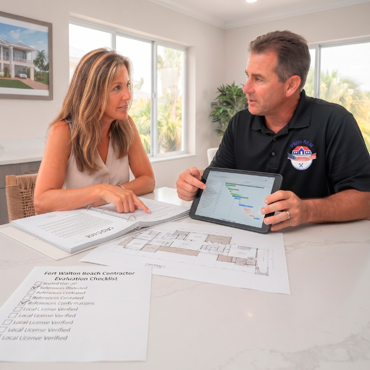
Choosing a contractor is the most important decision you will make in any remodel. The paint colors, the flooring, and the layout all matter, but none of them turn out well if the person doing the work is unreliable, unprepared, or unaccountable. A good contractor makes a stressful project feel manageable. A poor one can turn it into a nightmare of delays, extra costs, and repairs.
If you are searching for a remodeling contractor in Fort Walton Beach, you have plenty of options, from large companies to one-person handyman operations. After a hurricane, that list gets longer, because out-of-town crews arrive in large numbers. The challenge is knowing who to trust.
This guide gives you a practical, step-by-step way to choose with confidence. It covers what to verify, which questions to ask, how to read a contract, and the red flags to avoid. It was written for homeowners in Fort Walton Beach, Destin, Mary Esther, Shalimar, Niceville, Santa Rosa Beach, Miramar Beach, and across the Emerald Coast.
Why Your Choice of Contractor Matters So Much
The quality of the work affects far more than appearance. A contractor’s decisions determine:
- Your budget. Unclear scopes and sloppy planning lead to change orders and cost overruns.
- Your timeline. Poor scheduling and communication can stretch a project by weeks.
- Your home’s durability. Shortcuts in preparation, waterproofing, or structure show up later as peeling paint, cracked tile, or water damage.
- Your safety. Unsafe work, missing insurance, and unpermitted changes can put your family and your property at risk.
- Your peace of mind. Responsiveness and honesty make a big difference during a project that disrupts your daily life.
Taking time to choose well is the best investment you can make in your project.
Step 1: Understand the Work You Need and What Rules Apply
Before you start calling contractors, get clear on what you want to do. A written scope, even a simple one, makes everything easier. Our guide on how to budget for a home remodel explains how to build one.
Then understand how licensing works, because it depends on the type of work.
- In Florida, contractor licensing is handled by DBPR through the Construction Industry Licensing Board. Some categories of work, such as structural changes, electrical, plumbing, roofing, and air conditioning, require a state license.
- Other kinds of work, such as painting, flooring, cabinetry, and some finish carpentry, are generally not covered by a state contractor license. Rules for specific trades can be nuanced, so ask your contractor which licenses apply to your project, and confirm with DBPR if you are unsure.
- Permit requirements are separate. In Fort Walton Beach, for example, the city’s Building Division notes that some work, such as painting and replacing non-structural flooring, generally does not need a permit, while other work does. Always call before the project begins to confirm. The City of Fort Walton Beach Building Division lists its phone number on its website.
The key point is not to assume. Ask each contractor which licenses and permits apply to your project and why.
Step 2: Verify Credentials
Never take a contractor’s word for it. Check these items yourself.
License, where one is required. Search the contractor’s name or license number at MyFloridaLicense.com, the state’s official lookup tool. Confirm that the license is active, that it matches the type of work you are hiring for, and that there are no serious disciplinary actions. You can also call the DBPR office, which the City of Fort Walton Beach lists at 850-487-1395.
Liability insurance. Ask for a certificate of insurance, and have your contractor’s insurance company send it to you directly if possible. General liability insurance protects your property if something is damaged during the work.
Workers’ compensation. In Florida, contractors with employees generally must carry workers’ compensation coverage, with limited exemptions. Ask for proof of coverage or a valid exemption. If someone is injured on your property and the contractor is not covered, you could face real problems.
A real business. Check whether the company is registered with the Florida Division of Corporations at Sunbiz.org, and confirm a physical address and a working phone number.
Written proof. Keep copies of everything you receive. A trustworthy contractor will share documents without hesitation.
Step 3: Check Their Local Track Record
Experience in Fort Walton Beach matters. Local contractors understand the climate, the building styles, the permit offices, the HOA requirements, and the suppliers. Here is how to evaluate a track record.
- Read reviews carefully. Look at Google reviews and other platforms, and read the details, not just the star rating. Notice how the contractor responds to criticism.
- Look for consistent themes. Comments about punctuality, communication, cleanliness, and honest pricing are good signs.
- Ask to see past projects. Photos of completed work, especially projects similar to yours, show their quality.
- Call references. Ask previous clients whether the contractor finished on time, stayed on budget, and handled problems well.
- Check for complaints. Look at the Better Business Bureau and DBPR records for patterns.
- Ask how long they have worked in the area. A long local track record is harder to fake.
Step 4: Get Three Written, Itemized Estimates
Aim to collect at least three written estimates for the same scope of work. Provide each contractor with the same information so you can compare fairly.
A good estimate should include:
- A clear description of the work, room by room or phase by phase
- Materials, with brands, models, or allowances
- Labor costs and who will perform the work
- Permits, inspections, and who handles them
- Demolition, cleanup, and disposal
- Start and completion dates
- Payment schedule
- Warranty information
- How changes will be handled
Be cautious when one bid is much lower than the rest. It may leave out items, rely on lower-quality materials, or come from someone who plans to make up the difference through change orders. If you want a better understanding of how pricing works, see our interior painting cost guide for Florida, which explains how to compare quotes.
Step 5: Ask the Right Questions
A short conversation can tell you a lot. Here are questions worth asking every contractor.
- How long have you been working in the Fort Walton Beach area?
- Which licenses apply to this project, and can I see them?
- Can you send proof of liability insurance and workers’ compensation?
- Who will actually be on my property, your employees or subcontractors?
- Who will be my single point of contact?
- Can you provide local references for similar projects?
- Will you handle permits, and what inspections are required?
- What is your estimated start date and timeline?
- How do you handle unexpected problems and change orders?
- What is your payment schedule, and how much is the deposit?
- What warranty do you offer on labor and materials?
- How do you protect my home during the work, and how do you clean up?
- How do you communicate during the project, and how often?
- How do you handle hurricane season and weather delays?
- What happens if I am not satisfied with something?
Pay attention to how they answer. Clear, direct, patient answers are a good sign. Vague or defensive responses are not.
Step 6: Understand the Contract Before You Sign
A written contract protects both you and the contractor. Read the whole document, and do not sign anything you do not understand. A strong contract typically covers:
- Scope of work, described in detail
- Total price and a clear payment schedule tied to progress
- Materials and products, including brands and models
- Start date, completion date, and how delays are handled
- Change order procedures, so that any changes are approved in writing before work begins
- Permits and inspections
- Warranty terms
- Cleanup and disposal
- Insurance and licensing information
- Dispute resolution and cancellation terms
Two Florida-specific points deserve attention.
- Notice of Commencement and liens. For many projects above a certain size, Florida law requires a Notice of Commencement to be recorded with the county clerk, and Florida’s lien laws allow unpaid subcontractors and suppliers to place liens on a property. Ask your contractor and your building department how this applies to your project, and ask for lien waivers as you make payments.
- Deposits. Be cautious about large upfront payments. Ask what is customary for your project and what Florida rules apply, never pay the full amount in advance, and be wary of cash-only requests.
If you are unsure about a contract, consider having a Florida attorney review it, especially for larger projects.
Step 7: Watch for Red Flags
Some warning signs deserve a pause. Be cautious if a contractor:
- Shows up unsolicited, especially after a storm, and pressures you to sign immediately
- Cannot provide a license, insurance, or references when they are needed
- Asks for a large deposit or full payment upfront
- Insists on cash only
- Offers a price far below every other bid
- Will not put anything in writing
- Has no local address, or only a post office box
- Uses vague language about scope, materials, or timeline
- Discourages you from getting other quotes
- Suggests skipping permits to save time or money
- Asks you to sign over your insurance rights or sign documents you have not read
After hurricanes, scams increase. Our guide to rebuilding after a hurricane explains how to avoid storm chasers and what order to repair your home in.
Step 8: Look for Clear Communication
Technical skill is only half of what you are hiring. The other half is how the contractor communicates. During the estimate process, notice whether the contractor:
- Returns calls and messages promptly
- Shows up on time for appointments
- Listens to your goals instead of pushing a standard solution
- Explains options and trade-offs in plain language
- Provides updates and photos as work progresses
- Treats your home and your questions with respect
The way a contractor behaves before you hire them is usually the best preview of how they will behave afterward.
Step 9: Consider Availability, Scope, and Fit
The right contractor for your neighbor may not be right for you. Consider:
- Specialty. Does the contractor handle the type of work you need regularly?
- Size of the company. A small team may offer more personal attention, while a larger company may have more capacity. Match the size to your project.
- One team or many subcontractors. Fewer handoffs generally mean fewer communication problems.
- Timeline. Does their schedule match yours, and is it realistic?
- Chemistry. You will be seeing this person often, so comfort and trust matter.
Step 10: Choose a Contractor Who Lets You See the Result First
One of the biggest sources of stress in any remodel is not knowing how the finished space will look. That uncertainty leads to second-guessing, change orders, and disappointment. Contractors who use modern visualization tools can help reduce it.
At Pros Rem, we use AI-powered visual previews, starting from photos of your own rooms, so you can see how colors, flooring, tile, and finishes could look before work begins. Settling those decisions early can help avoid costly changes later.
Why Homeowners Choose Pros Rem
We are naturally biased, so we will not tell you to skip the steps above. Verify us the same way you would verify anyone else. Here is what we offer, and what you can check for yourself.
- A local team based in Fort Walton Beach. We are not a franchise or a call center. The people who talk with you are the people who manage your project.
- One crew for many trades. Painting, flooring, drywall, tile, carpentry, bathroom and kitchen remodeling, and water and fire damage restoration are handled by one team, with a single point of contact, so you are not coordinating a revolving door of subcontractors.
- AI-powered previews. You can see your renovation before we build it.
- Written estimates. We provide clear estimates that explain what is included, so you can compare us fairly with other contractors.
- Insurance. We carry liability insurance in Florida, and we are happy to share documentation on request.
- Responsiveness. Our site notes that estimate visits are typically scheduled quickly, often within 24 hours.
- Reviews you can read. Our Google reviews are public, so you can see what past clients say about our communication, punctuality, and workmanship.
- Projects of every size. We handle everything from a single room to a whole-house renovation.
We encourage you to ask us every question in this article. Ask which licenses apply to your project, ask for proof of insurance, read our reviews, and compare our estimate with others. If we are the right fit, you will know. If not, we would rather you choose well than choose quickly.
To start, contact Pros Rem for a free estimate.
Frequently Asked Questions
How do I verify a contractor’s license in Florida? Search the contractor’s name or license number at MyFloridaLicense.com, the state’s official lookup tool. Check that the license is active and matches the work. Not every trade requires a state license, so ask which licenses apply to your project.
Does a painter or flooring installer need a state license in Florida? Generally, painting and flooring are not covered by a state contractor license, but other work, such as structural, electrical, plumbing, roofing, and air conditioning, usually is. Rules can be nuanced, so confirm with DBPR for your specific project.
How many estimates should I get? At least three written, itemized estimates for the same scope of work is a good rule, so you can compare fairly.
How much deposit is reasonable? It depends on the project and on Florida rules. Be cautious about large upfront payments, avoid paying the full amount in advance, and tie later payments to completed work.
Do I need a permit for my remodel? It depends on the work. Some projects, such as painting or replacing non-structural flooring, may not need one, while structural, electrical, and plumbing changes usually do. Call your local building department before work begins.
Should I hire a local contractor or a bigger company? Both can be good. Local contractors know the climate, codes, and suppliers and are easy to hold accountable. Whatever you choose, verify credentials, check references, and get everything in writing.
What should I do if a contractor does not finish the job? Start with your written contract, document everything, and communicate in writing. You can contact DBPR for licensed contractors, and consider speaking with a Florida attorney.
Final Thoughts
Choosing a remodeling contractor in Fort Walton Beach does not have to be intimidating. Know what you need, verify credentials, check local reviews and references, compare written estimates, ask direct questions, and read the contract carefully. Pay as much attention to communication and honesty as to price.
When you are ready to talk about your project, our team at Pros Rem is here to help you every step of the way.
Pros Rem Services by City
Pros Rem proudly serves homeowners and property owners across the Emerald Coast. Explore our services and find your city below.
Our services
- Painting
- Flooring
- Drywall
- Tile installation
- Carpentry
- Bathroom remodeling
- Kitchen remodeling
- Water damage restoration
- Fire damage restoration
Where we work
- Fort Walton Beach, FL
- Destin, FL
- Mary Esther, FL
- Shalimar, FL
- Niceville, FL
- Santa Rosa Beach, FL
- Miramar Beach, FL
